
7 Signs You Need Help Managing Your Airbnb (And What to Do About Each One)

“Great hosting isn’t about doing everything yourself—it’s about having the right team behind you.”
If you're answering guest messages at 2 AM, scrambling to find last-minute cleaners, or watching your occupancy flatline despite a great property, you don't have a hosting problem — you have a management problem. This post breaks down the clearest warning signs, compares your options (self-managing, co-hosting, and full-service management), and helps you decide which solution fits your situation.
You started hosting on Airbnb to earn extra income, not to work a second full-time job. But somewhere between the midnight check-in texts and the Sunday morning cleaning scrambles, that's exactly what happened.
If you're reading this, you probably already suspect you need help. The real question is: what kind of help, and when does the investment start paying for itself?
Here are seven signs it's time to stop doing everything yourself — along with what to actually do about each one.
1. You're Glued to Your Phone for Guest Messages

“Managing guest messages shouldn’t run your life—build systems that work for you.”
Guests expect fast replies. Airbnb's algorithm rewards hosts who respond within an hour, and slow response times can cost you Superhost status and push your listing down in search results. That means every unanswered message carries a real financial penalty.
If you're replying to booking inquiries during dinner, fielding check-in questions on your commute, and troubleshooting Wi-Fi passwords at midnight, you're not hosting — you're on call.
What to do: Automated messaging tools can handle routine questions (directions, check-in instructions, house rules). But they can't manage nuanced situations — a guest locked out at 1 AM, a noise complaint from a neighbor, or a last-minute cancellation request. For true 24/7 coverage, you need a person or team monitoring communications around the clock.
2. Cleaning and Maintenance Are Slipping
“Systems create consistency—and consistency creates results.”
Cleanliness is the single fastest way to lose stars. One overlooked smudge on a bathroom mirror, a stray hair on a pillowcase, or a forgotten dish in the sink can drop a review from five stars to four. Stack a few of those, and your listing's search ranking takes a hit that costs you bookings for months.
The deeper problem isn't any single missed cleaning — it's the system. If you're personally coordinating cleaners via text, chasing down handymen for minor repairs, and doing last-minute supply runs for toilet paper and coffee pods, you don't have a reliable turnover process. You have a patchwork.
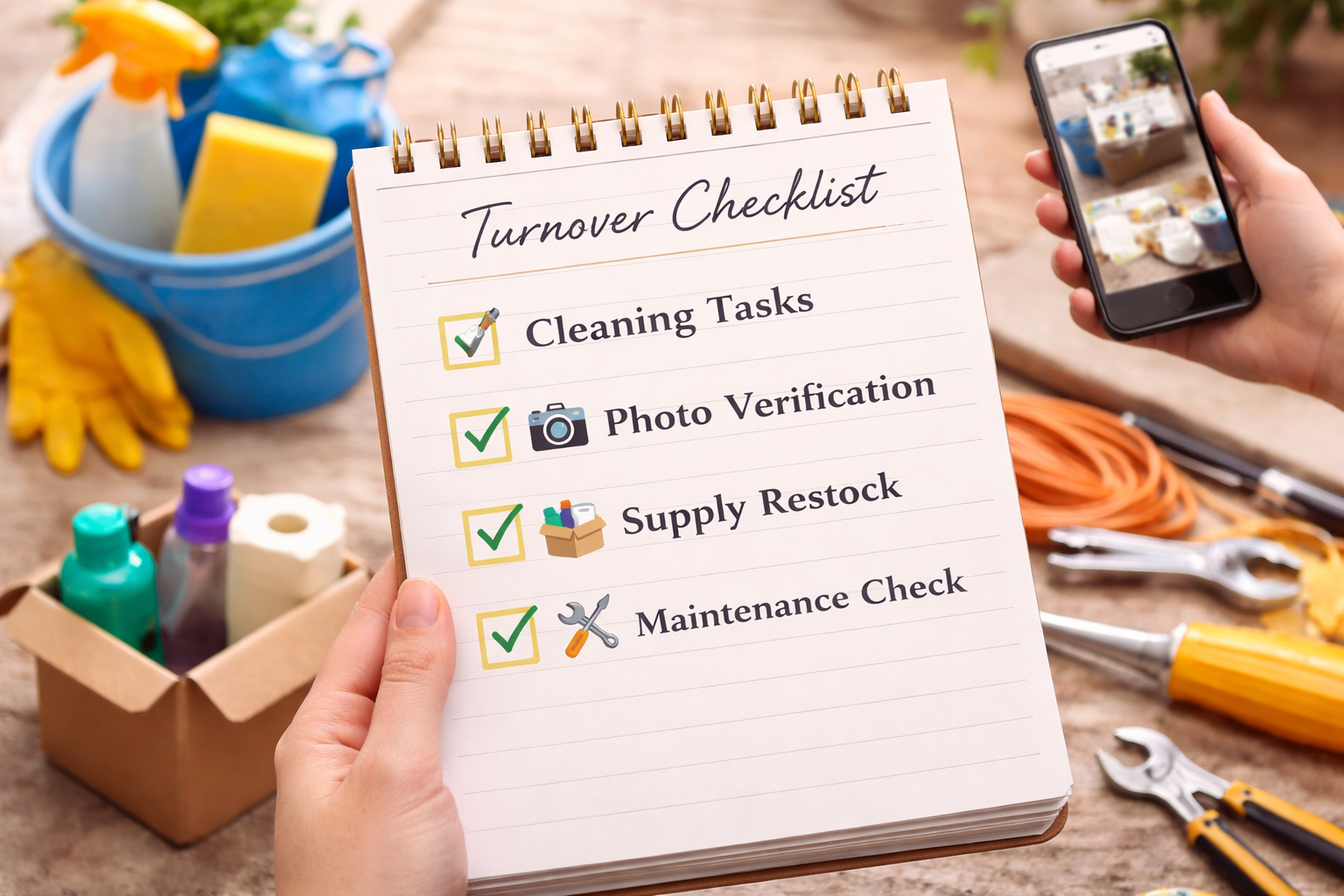
What to do: Professional management teams work from detailed cleaning checklists, schedule turnovers automatically, and verify each cleaning with photo documentation before the next guest arrives. They also handle restocking and routine maintenance, so small issues (a dripping faucet, a wobbly shelf) get fixed before they become guest complaints.
3. Your Revenue Has Flatlined (or Dropped)

“When revenue stalls, it’s rarely the market—it’s the systems, speed, and standards behind your operation.”
Here's a stat worth sitting with: professionally managed Airbnbs earn roughly 25% higher daily revenue and 18% higher occupancy compared to owner-managed listings. That gap isn't because professional managers have better properties. It's because they price more aggressively and more accurately.
Most DIY hosts set a nightly rate and maybe adjust it seasonally. Professional managers reprice daily — sometimes multiple times a day — based on local demand signals, competitor rates, upcoming events, and booking velocity. In a market like Austin, where a single weekend event like SXSW or ACL can triple demand, static pricing leaves enormous amounts of money on the table.
What to do: At minimum, use a dynamic pricing tool like PriceLabs or Beyond Pricing. But pricing is only half the equation. Listing on multiple platforms (Airbnb, VRBO, Booking.com) and optimizing your listing copy, photos, and amenity tags also drive occupancy. If you're only on Airbnb and haven't updated your listing description in six months, you're competing with one hand tied behind your back.
4. You're Burning Out — and Your Performance Shows It

“You can’t operate at peak performance if you’re running on empty.”
Burnout doesn't announce itself. It creeps in. You start taking a little longer to reply to messages. Cleanings become "good enough" instead of spotless. You stop adjusting your pricing because it feels like one more thing on the list. Each shortcut feels minor in isolation, but the compound effect is measurable: lower ratings, fewer bookings, declining revenue.
Self-managing hosts typically spend 15–20 hours per week on hosting tasks — guest communication, cleaning coordination, pricing updates, supply management, and maintenance. That's a part-time job. If you also have a full-time career, a family, or other properties, the math simply doesn't work long-term.
What to do: Be honest about whether you're still delivering the quality that earned your early five-star reviews. If the answer is no, that's not a personal failure — it's a capacity problem, and the solution is delegation, not willpower.
5. Local Regulations Are Giving You Headaches

“Stress is often the first sign something isn’t working.”
Short-term rental rules vary wildly by city, and they change frequently. In Austin, every Airbnb listing needs a valid STR license, and the city has been tightening enforcement. New spacing restrictions limit how many STRs can operate on a single block. Hotel occupancy taxes need to be collected and remitted correctly. Miss a deadline or filing requirement, and you're looking at fines — or having your listing removed entirely.
What to do: If you're in a heavily regulated market, local expertise isn't optional. A manager who specializes in your city will handle permit applications, tax remittance, and regulatory updates so you're not personally tracking every city council vote that affects your listing.
6. You Own Multiple Properties (or Want To)

“More properties mean more opportunity—but only if your operations can keep up.”
Managing one Airbnb is demanding. Managing two or three while maintaining quality is a fundamentally different challenge. Every additional property multiplies your coordination burden: more cleaners to schedule, more guests to communicate with, more maintenance to track, more tax filings to submit.
What to do: If you're planning to scale your STR portfolio, build the management infrastructure first. Trying to self-manage three or four properties typically results in all of them underperforming compared to what one well-managed property could earn.
7. You Keep Asking Yourself, "Is There a Better Way to Do This?"

“If you keep asking, ‘Is there a better way?’—there is. And you’re closer to finding it than you think.”
Sometimes the clearest sign is the simplest one. If you've found yourself Googling whether you need a property manager, reading comparison posts, or asking other hosts how they handle the workload — that's your answer. Hosts who are comfortably self-managing don't search for alternatives. The fact that you're here means something needs to change.
Self-Managing vs. Co-Host vs. Property Manager: A Practical Comparison
Not every host needs the same level of help. Here's how the three main options actually differ in practice.
Self-Managing
You keep 100% of revenue and maintain full control. The trade-off is 15–20+ hours per week of hands-on work, and the risk that quality degrades as fatigue accumulates. Self-managing works well for hosts with a single property, flexible schedules, and genuine enjoyment of the day-to-day hosting tasks.
Co-Hosting
A co-host typically works under your Airbnb account, handling guest communication and cleaning coordination for a percentage of revenue (usually 10–20%). It's a lighter-touch option that keeps costs down. The limitation is scope: most co-hosts operate exclusively on Airbnb. They generally don't manage listings on VRBO or Booking.com, handle dynamic pricing strategy, deal with regulatory compliance, or coordinate complex maintenance projects.
Full-Service Property Management
A professional manager handles everything — guest communication, turnover coordination, multi-platform distribution, pricing optimization, vendor management, regulatory compliance, and emergency response. The cost is higher (typically 10–30% of revenue, or a flat monthly fee), but the revenue lift from better pricing and higher occupancy often more than covers it.
The key question isn't "which is cheapest?" It's "which option produces the best net outcome for my situation?" A co-host who costs 15% but only lists on one platform may actually leave you with less profit than a full-service manager whose pricing expertise generates 25% more revenue.
What About Automation? Can Technology Replace a Manager?
Smart locks, automated messaging, and dynamic pricing tools have made self-managing easier than it was five years ago. But automation has clear limits.
Software can send a check-in message. It can't let a guest into the building when the smart lock battery dies. A pricing algorithm can adjust your nightly rate. It can't negotiate with a long-term guest who wants a monthly discount, or decide whether to accept a last-minute booking that requires an emergency cleaning. Automation handles the predictable. Hosting is full of the unpredictable.
The most effective approach combines both: use automation to eliminate repetitive tasks, and pair it with human oversight for judgment calls, physical tasks, and guest experience issues that require a real person.
How to Choose the Right Airbnb Management Partner

“The right Airbnb management partner doesn’t just manage your property—they maximize its potential.”
If you've decided to hire help, here's what to evaluate:
Pricing structure. Percentage-based fees mean you pay more as you earn more. Flat-fee models (like STR Management Co's $595/month per property) give you cost predictability and let you keep 100% of the revenue upside from better pricing.
Platform coverage. Ask whether they list on multiple platforms. Airbnb-only management leaves distribution — and revenue — on the table.
Local expertise. In a regulated market like Austin, your manager should know the STR licensing process, tax requirements, and neighborhood-specific rules inside and out.
Transparency. You should retain ownership of your listings and accounts. Your manager works for you, not the other way around. Ask about reporting, access, and what happens if you part ways.
Cleaning and maintenance process. Ask specifically how turnovers are managed. Look for photo verification, detailed checklists, and a clear system for handling repairs and restocking — ideally at cost, with no markups.
What a Stress-Free Hosting Setup Actually Looks Like
At STR Management Co, we built our service around a simple principle: owners should earn more, keep more, and do less. Here's what that looks like in practice.
We handle 24/7 guest communication, so no message goes unanswered — day or night. We reprice your listing daily using market data, event calendars, and competitor analysis. We coordinate turnovers through experienced, Airbnb-specialized cleaners who follow a detailed checklist, with photo verification after every clean. We manage maintenance and supply restocking at cost, with no markups. And we handle multi-platform distribution so your property is visible wherever guests are searching.
All of this for a flat $595/month per property — no percentage commissions, no hidden fees. You keep your listings, your brand, and your revenue. We handle the operations.
Ready to see if it's the right fit? Reach out to STR Management Co for a free consultation. We'll review your current setup, identify where you're leaving money on the table, and show you exactly what hands-off hosting looks like.
Key Takeaways
The clearest warning signs are constant guest communication demands, declining cleaning quality, flat revenue, burnout, and regulatory stress.
Self-managing works if you have one property, a flexible schedule, and the energy to spend 15–20 hours per week on hosting.
Co-hosts are a good mid-range option but usually cover only Airbnb and basic tasks.
Full-service managers handle everything across platforms and often generate enough additional revenue to more than cover their fees.
Automation helps but can't replace human judgment for emergencies, physical tasks, and guest experience decisions.
When evaluating managers, look at pricing structure, platform coverage, local expertise, and transparency — not just the headline fee.
