
Is Your Long-Term Rental Leaving Money on the Table?

“Your long-term rental may be steady—but is it truly earning what it could?”
Key takeaways
Compare net, not gross. A lease and a peak-season Airbnb screenshot tell you almost nothing. The real number is owner cash flow after furnishing, cleaning, utilities, and management.
City averages are tighter than you think. In Austin, the average STR and the average long-term rental aren't far apart. The spread lives in specific assets and specific locations.
Underperformance is a pattern, not a line item. Sub-market occupancy, ratings below 4.8, stale pricing, and slow guest replies signal lost revenue long before your P&L does.
Fee structure is a hidden profit lever. Percentage-based management can quietly cap your upside. A flat fee changes the math even when gross revenue stays flat.
Conversion is a yes/no question with hard gates. Location, your available hours, and local compliance decide it — not the headline ADR.
Most owners answer the wrong question

“The real question isn’t which rental earns more gross income. It’s which one leaves you with more net profit.”
Most rental owners answer the wrong question. They pull up a rent estimate, glance at a peak-season Airbnb screenshot, and decide short-term rentals are obviously more lucrative — or obviously too much hassle. Both conclusions skip the only number that matters.
When you actually weigh long term vs short term rental profitability, the comparison isn't monthly rent versus nightly rate. It's net income after expenses, the hours you'll spend managing, the risk you'll carry, and how much operational drag sits between gross revenue and the cash that lands in your account.
That gap is exactly why we built STR Management Co around a flat-fee, white-label model: owners keep their listings, reviews, and direct bookings while we run the operating system behind the scenes. Today we manage more than 90 properties and over $4 million in annual booking revenue — and the lesson across all of them is the same. Short-term rentals reward operators who run them like a business, not a screenshot.
The market still rewards good operators — not hype
The national backdrop supports short-term rentals, but only for hosts who execute. AirDNA reports that U.S. supply growth cooled from 22.3% year over year in 2022 to 6.9% in 2024, while demand grew 7.0% over the same stretch. Its 2025 outlook projected occupancy rebounding to 54.9% with RevPAR up 2.9%, and its 2026 forecast calls for 4.6% listing growth, 1.5% ADR growth, and only a slight 1% softening in occupancy.
Translation: the land-grab era is over. The market is normalizing into one where execution beats hype — which is good news if you're willing to operate well and bad news if you assumed nightly rates would keep climbing on their own.
Airbnb vs long term rental income: the averages are closer than you think
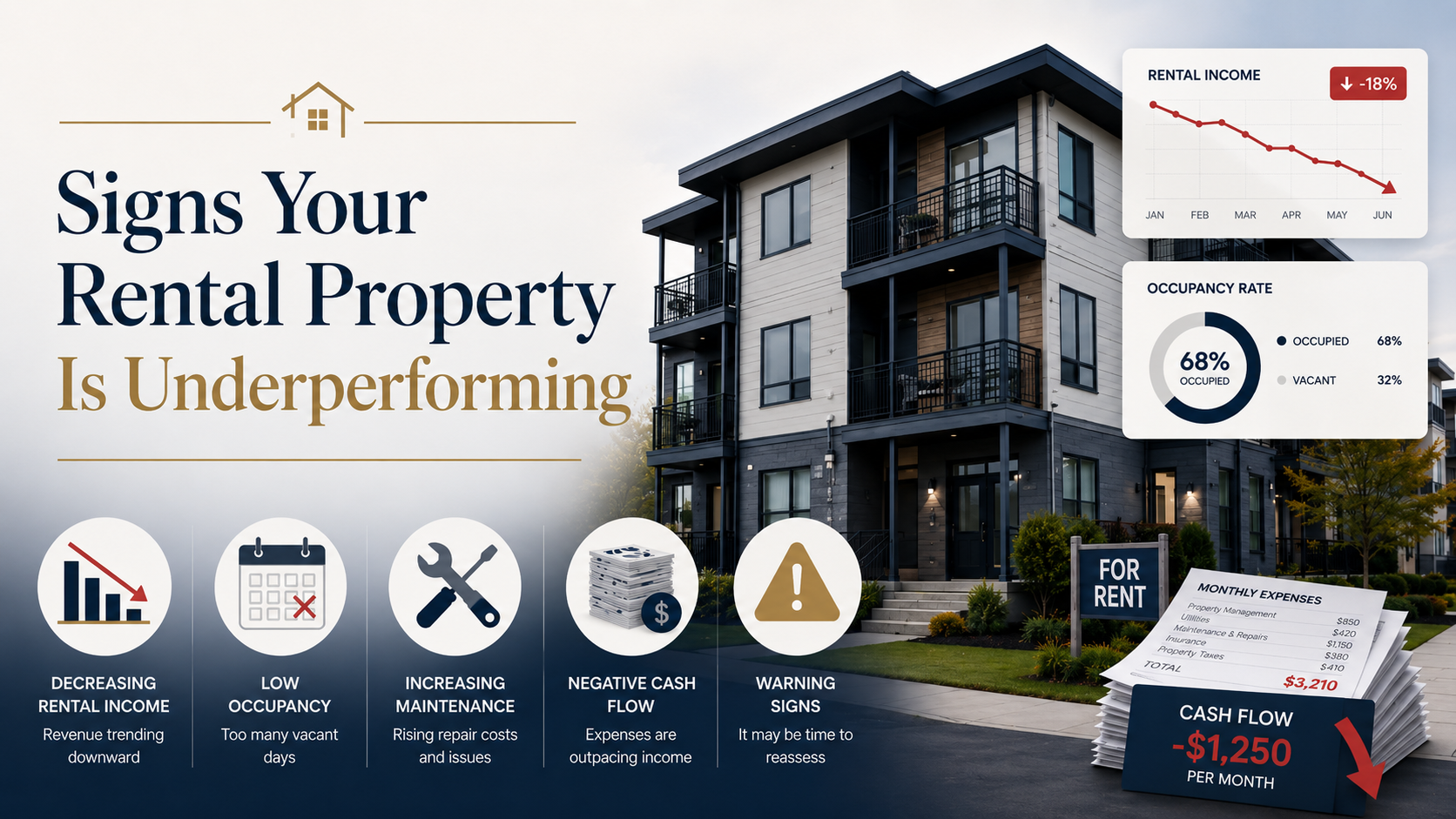
“An underperforming rental doesn’t always look vacant — sometimes it looks busy while quietly draining your profits.”
Here's the part most owners get wrong. When you compare Airbnb vs long term rental income at the city level, the two are often neck and neck.
AirDNA's public Austin market data shows average annual STR revenue of $24.4K, 54% occupancy, and a $265.60 average daily rate across more than 17,000 Airbnb and Vrbo listings over the past year. Zillow, meanwhile, puts Austin's average long-term rent at $1,950/month — roughly $23.4K a year. On the citywide average alone, the question "is Airbnb more profitable than renting?" is nearly a coin flip, and that's before you subtract utilities, supplies, furnishing, cleaning, and management.
So where does the upside actually live? In the right asset with the right operating system. In our Austin modeling for a well-positioned 3-bedroom home, a well-run STR can gross roughly $35,000–$40,000 a year versus about $27,000–$30,000 for a comparable lease. But that gap narrows fast once hospitality-level costs hit the books. That's the honest version of short term rental income potential: it's real, but it is never automatic.
Signs your rental property is underperforming
The clearest signs your rental property is underperforming rarely show up on a single statement. They show up as a pattern: occupancy stuck below market, ratings drifting down, guest messages eating your evenings, a missed turnover, pricing that hasn't moved in months, compliance tasks that keep sliding to "later."
In our own operating playbooks, five signals come up again and again — sub-market occupancy, reviews under 4.8, stale pricing, missed cleanings, and regulatory drift. Each one quietly converts an asset back into a chore.
Airbnb's own hosting guidance explains why these matter so much. Higher ratings and reviews drive more bookings and earnings, and after checkout guests grade six things: cleanliness, accuracy, check-in, communication, location, and value. Response rate — how fast you reply to inquiries — is tracked separately and shapes how the algorithm treats you. Let one operational area slip, and revenue tends to follow within a booking cycle or two.
Stale listings are their own silent leak. Guests filter heavily by amenities — pool, wifi, free parking, climate control, kitchen, hot tub, washer/dryer, self check-in, TV, BBQ grill — and Airbnb says completing your amenity list helps you surface in search and sets accurate expectations. It also expects your photos, amenities, and descriptions to match the real space. If your copy and photos haven't been refreshed in a year, your "property problem" is often a merchandising problem in disguise.
How to increase rental property income

“Your rental property should do more than sit on the market — it should grow your income.”
There's no single silver bullet here. Raising income is a stack of disciplined moves that lift revenue, protect ratings, and cut waste at the same time. Start with the three levers that move the needle fastest.
1. Price like the calendar is alive. Airbnb's pricing tools let you set weekend premiums, run discounts and promotions, compare similar listings, and use Smart Pricing to react to local demand. Lowering minimum nights fills calendar gaps; widening your advance-booking window captures planners. These are revenue gains you can make this week without touching your expenses.
2. Treat presentation as revenue, not decoration. In a 2024–2025 study of more than 14,700 global listings, hosts who used Airbnb pro photography earned 21% more over the following year than those who didn't. Pair sharp photos with a complete amenity list and accurate descriptions, and you'll increase ROI on rental property through visibility alone — guests can't book a listing they never see.
3. Stop relying on one platform. Airbnb-only exposure leaves money on the table. Multi-platform distribution shrinks vacancy gaps and gives your pricing more room to work, and adding mid-term placements captures relocations, traveling professionals, and insurance stays that nightly-only hosts miss entirely.
Then there's the quiet lever owners forget: fee structure. Hostaway's 2025 guide puts typical management fees at 10–40% of rental income — percentage models usually land around 10–25%, full-service around 15–40%. STR Management Co charges a flat $595/month per property, with no commissions, no vendor markups, and month-to-month terms. The implication is sharp: if your current manager earns more every time you do, switching to a flat fee can lift net cash flow even if gross revenue never changes.
When it makes sense to convert a long-term rental to Airbnb
Sometimes converting is the right call. Often it isn't. The decision comes down to three gates, and failing any one of them usually settles it.
Location. In our Austin framework, STRs show the strongest gross upside near high-demand zones — downtown, South Congress, the Domain, and UT-adjacent areas. More suburban properties typically earn more, with far less effort, as straightforward long-term rentals.
Your time. Be honest about capacity. Do you have 10+ hours a week to host, or the budget for professional management? Nightly rentals are a hospitality business; running one on fumes is how ratings slip and revenue follows.
Compliance. This is where "easy conversion" plans tend to collapse, especially in Austin. The city defines short-term rentals as stays under 30 consecutive days and requires every operator to hold an active license, valid for two years. Tenants can operate STRs with landlord permission, a local contact must live within the Austin metro area, and starting July 1, 2026, platforms must display license fields and remove unlicensed listings on the city's request. Fees run $836.30 for a new license and $385.30 to renew. The rules are workable — but they are not optional, and your HOA, lease, or deed restrictions may close the door before the city ever does.
When a property has some upside but not enough to justify full self-management, there's a middle path: hybrid support covering mid-term placements, cleaning and inspection scheduling, maintenance coordination, and compliance guidance. For owners who aren't ready to go all-in on nightly bookings, that bridge usually beats an all-or-nothing bet.
Why more owners hire an Airbnb property manager

“Hiring an Airbnb property manager isn’t just about saving time — it’s about turning your rental into a smoother, smarter, and more profitable investment.”
The moment to hire an Airbnb property manager usually arrives when the property has become a business but still runs like a side hustle.
Short-term operations go well beyond posting a listing. They span pricing, listing optimization, calendar management, cleaning coordination, check-in logistics, guest communication, review management, maintenance, and compliance — every day of the year. When one link breaks, the damage spreads into refunds, bad reviews, and future lost bookings.
That's the real reason owners start typing "airbnb property management services near me." They don't need "help with Airbnb." They need a reliable operating system. And the math often works in their favor: full-service management frequently generates enough added revenue to more than cover its own fee — especially when the alternative is flat revenue, burnout, and missed turnovers.
When you compare managers, the headline fee isn't the question. The question is what the fee buys. STR Management Co's flat $595/month includes 24/7 human guest support, cleaning and quality-inspection scheduling, repair and maintenance coordination, pricing optimization, multi-platform distribution, direct-to-owner payouts, guest identity verification, and STR regulation guidance — with white-label account ownership and no vendor markups. Most properties onboard in 3–5 business days.
If you specifically want a short term rental management company in Austin, TX you can trust, local operations matter even more, because Austin requires a metro-area contact and is tightening platform-level enforcement. We don't see ourselves as "just" a management brand. We're an STR-specialized operating partner built to protect revenue and keep owners out of the weeds.
FAQ
Is Airbnb more profitable than renting long term? Sometimes — but only when location, demand, listing quality, pricing, and operations combine to create a real spread after expenses. Citywide Austin data shows the average STR and average lease are closer than most owners expect, while a strong 3-bedroom in a high-demand area can clearly outperform on gross. The answer depends on your specific property, not the headline narrative.
How does rental arbitrage compare to a long term rental? Rental arbitrage vs long term rental is a different risk profile entirely. Hostaway defines arbitrage as leasing a property long-term, then subletting it short-term for a spread — lower upfront capital, but profitability that hinges on pricing, demand, utilities, cleaning, vacancy, and strict legal compliance. In Austin, tenants can run STRs with landlord permission, but the lease, local rules, and platform requirements all have to line up first.
How do I make more money with rental property without it becoming a second job? Start with the operating levers Airbnb itself highlights: pricing tools, promotions, minimum-night controls, complete amenities, accurate descriptions, and pro photography. Then decide whether your time is better spent doing that work yourself or installing a manager who runs pricing, pacing, turnovers, reviews, and vendors consistently. For most owners, the second route is the faster way to increase ROI on rental property without the burnout.
What should I look for when searching "airbnb property management services near me"? Local operational coverage, turnover reliability, transparent fees, listing ownership, fast guest support, and proven compliance knowledge — proof the company handles far more than messages. In Austin, local-contact rules and the July 1, 2026 platform enforcement make that even more important. Look for a partner that keeps you in control of your listings and reviews, coordinates cleaning and maintenance at cost, and works month-to-month.
Find out what your property could actually earn
Here's the uncomfortable truth this whole post points to: most owners never run the net-income comparison that would tell them whether they're leaving money on the table. They guess.
You don't have to. Book a free call with STR Management Co, and we'll model your property's short-term revenue upside against its current long-term rent — net of expenses, with your location and constraints built in. No commissions, no long-term contract, just a clear answer to the question you've been guessing at.
What's your property currently earning, and have you ever run the net comparison? That's the number worth knowing before you decide anything.
